sábado, 15 de abril de 2017

Japan Part 2


Our second stop was Koenji, Tokyo, a neighborhood known for its underground music and art scene. 


Bed & Art hotel  had only 2 rooms, both with original art by local artists. Ours was called Into the Foreign and was covered in countless paintings of colorful running wolves.


We went out for my birthday meal at a sushi restaurant where no one spoke English, and so we had to point and hope that what we thought was something, would really be what we thought it was.

It was fun though. Afterwards, we went looking for a 3 to 2 prong converter so we could actually use our computers. We did not find one, and thus I settled for gently removing my third prong (ripping it out using the edge of table)

The next day we took a train to Yokohama to visit Camille's friend Samuel, the uncle of our neighbor in Honduras, who married a Japanese woman around the time I was born, moved to Japan, and had two daughters, both younger than me. They taught me how to write my name in Japanese.

Neither of the daughters spoke Spanish or English, and thus I had to resort to drawing communication. Their house was a traditional Japanese home. It was wooden, quiet, and simple. Their table was a floor table, but under it was a rectangular depression to dangle your feet into. We went out for a dinner of beef barbecue, where we cooked our beef at our table, kind of like Korean BBQ.

We slept on futons on tatami mats (which were really comfy) and slept really well. The next morning we had a breakfast containing miso soup, eggs, among other things. It was a rainy day, not unlike an early spring day in New England.

jueves, 13 de abril de 2017

Japan Part 1

 When we got to the airport, we took a train to Narita, a small town on the outskirts of Tokyo which is built around a famous temple. Narita is extremely close to the airport, so most people only ever go to the airport on their way to and from Tokyo, and never see the town. When we left the train it was cold, but not freezing. We wandered the narrow streets looking for our ryokan (old style Japanese inn), and got lost on the way. Luckily a young man helped us find it The ryokan was very large and was cozy and comfortable. There was an onsen (hot spring pumped into a tub), but they didn't allow people with tattoos, and since Camille had one on her back, she didn't go in. We ate dinner in the ryokan, which was brought to us in our room. We ate on the small low table and sat on cushions. Dinner was an interesting mix of strange Japanese food we had never even heard of before. Fermented as well as pickled food was common in ryokan meals as we would soon discover. After we ate, the room attendants came in and laid out our sleeping futons on the tatami mats. We slept soundly. The next day was my birthday, had a traditional Japanese breakfast containing a variety of tasty and not so tasty items, including: raw egg, rice, and fermented soy beans (natto). We checked out at ten to go see the Narita temple. To our benefit the shrine was right next door. We walked through the grand entrance gate with 4 wooden guardian statues, with intense faces. In front of the main building was a large metal cauldron-like receptacle under a roof, where people burned prayer paper and basked in the smoke. It was later explained to us that people do this in the belief that the smoke would increase their luck and intelligence. We later did it too, because I really needed the intelligence. The main building was massive. It had an extremely tall roof, and which made it feel like a cathedral, perhaps to intimidate worshipers and to make people feel small. We walked outside in the large wooded park, through the pathways lined with trees and cherry blossoms just beginning to bloom. We eventually came to a second, even taller spire-like building. On the way there we found a small closed off building that may also have been a shrine. We weren't sure because everything was in Japanese. As we walked back to get our bags from the ryokan and continue on our journey, we took photos of the beautiful pink camellias, as well as the massive sword that was over the entrance of another small shrine. After we got our bags we walked through the streets and marveled at the eel restaurants where the eel peelers were stationed outside cutting up the still wiggling eel bodies. They would slice them down the middle and remove the guts, they did this while holding the eel down so it wouldn't squirm so much. We also saw interesting squishy soap in a store. It came in a disk shape, or a sphere shape. At first we thought they were some edible snack, but then I saw people trying them out and realized they were actually soap. I had a 'soft cream' cone, which was like ice cream, but soft. Then we walked to the train station, to take a train to Koenji...


viernes, 7 de abril de 2017

Hong Kong

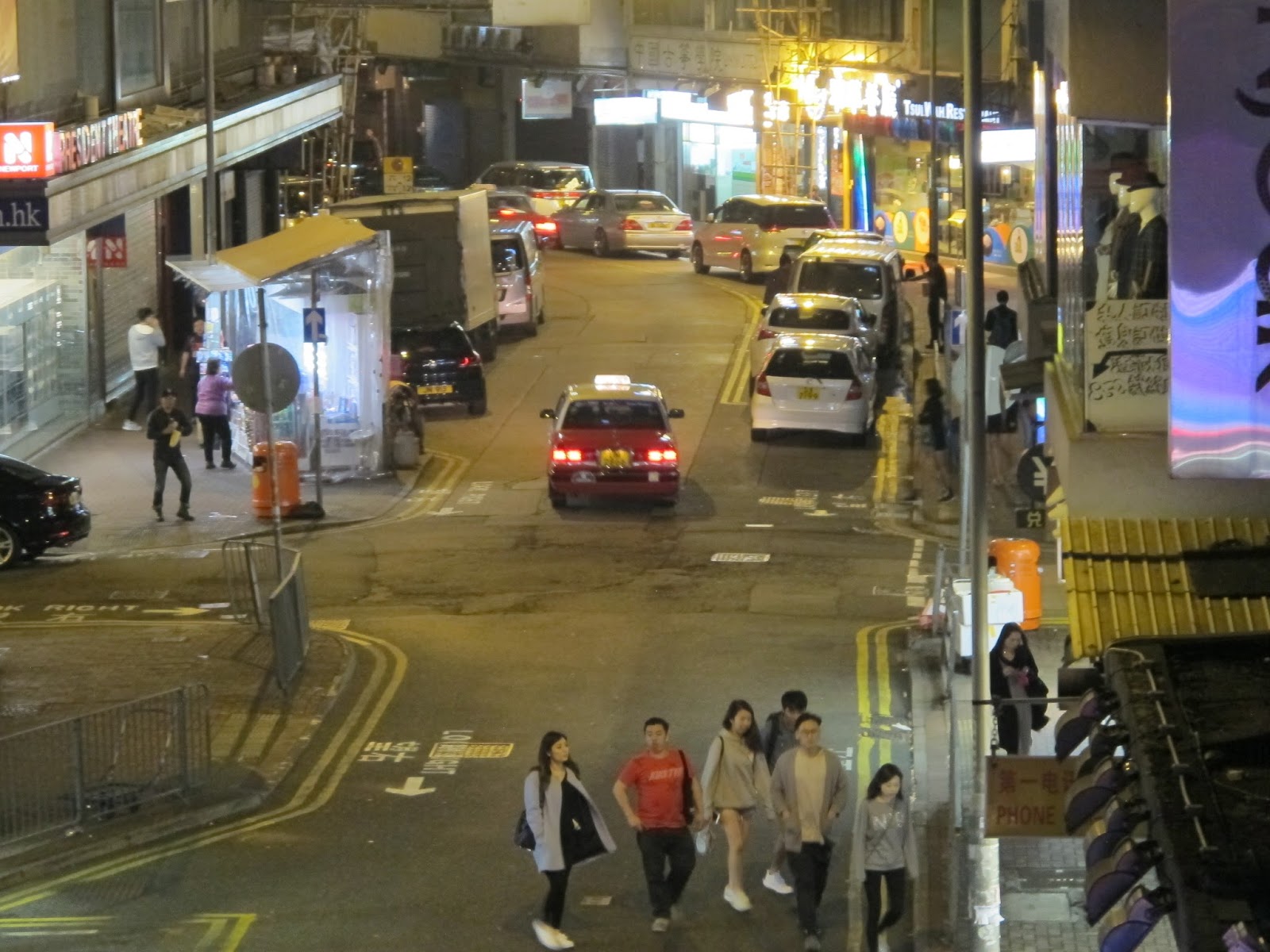
After arriving on the plane from Hanoi we took the airport express train to Causeway Bay, a neighborhood in downtown Hong Kong. After searching for what seemed a long time we found the hostel. It was a minimalist and clean little place called Still House. During the day it was a cafe and work space but it had rooms for people to stay in but we were the only guests. It was tucked away in a building, and the door was in the back of a key stall. A few blocks away was a tall building with lights that lit up in such a way that it looked like an animation on the side of the building, sometimes people walking, other times abstract blotches of light. Inside the hostel they had a simple harp that a woman would come and play every Wednesday. I had fun playing on the harp and making up pieces. We went out for a dinner of fried tofu and tempura, and then went and found a park. We played and exercised on public exercise machines. Then we went back to the Still House to sleep.
The next day we went to a larger park,Victoria Park, where we walked around. We stopped at a model boat pond where people would bring small boats (about two feet long) and drive them around with remote controls. The park was very clean and organized. There was a walking path, and a jogging path, and a bike path and everything was defined clearly by signs. We walked around and started noticing that the people were mainly older people and children. We wondered and eventually came to the conclusion that older kids were at school and adults were at work. The park people were closing a flower show so there were flowers and tents and dirt fenced off from the general public. We walked over to the public library. It was massive. It was 6 or 7 floors tall, and looked a lot like the New York public library on the outside. The inside was very comfortable and modern. I explored the young adult fiction and read several good short books. The view from the floor we were on was great. We could see the park and even across the channel between the two islands that make up Hong Kong

 One day we went hiking on one of the nature park mountains in Hong Kong. Our camera was dead so we couldn't take any photos. We had lunch in a strange sushi place where the sushi came on conveyor belts and you grabbed as much as you wanted, then the waitress would count how much you had and charge you. At the base of the mmountain was a Christian cemetery. However, the graves were decorated with small dragons and other Chinese funerary symbols. The cemetery itself was built diagonally, with many terraces and stairs, the newest graves were at the top and the oldest were at the very bottom. We explored a bit and tried to find the hiking

path. Once we found it we walked for a while and noticed that there were people from the water department doing... something. We assumed that the water for Hong Kong came from the mountains and so the water department people were doing something with waterways. The ocean-ward side of the mountain had short, stooping trees because of all the wind. The top's trees didn't even reach my knees. We had cake when we reached the top. Afterwards we hiked down to the highway where we took a bus to a small beach town where we walked on the beach. We then took a bus back to Hong Kong.

Originally Art Basel was an art show for art collectors to go and buy art in bulk. Then it moved to Miami, and then Hong Kong. We were just in time to see Art Basel kind of a supermarket but for art. We withstood a few hours of art before out legs and brains hurt. During this time we noticed several trends, mainly circular, concave, reflective surfaces. Basel wasn't all new art though we saw photos from the 90s, as well as Kieth Haring paintings. One piece that really caught my eye was a kinetic structure with so much going on I sat for several minutes trying to figure it out. It had an air blower that was on a small track propelled by a motor It blew air to play a harmonica. I couldn't really figure out everything that was going on because there was so much happening. Once we got exhausted enough we went back to the hostel and had dinner.  

sábado, 1 de abril de 2017


On our way down from Hue we stopped at several places. The first was a small old bridge near hue. It had been built by order of a queen mother as a gift for the town. Near it was a museum of agriculture. We got to see the process of noodle making. Everything from rice beating, to smoothing, to cutting up and cooking. The second place we visited was a mountain pass that had been in use for a long time. A tunnel had been built by the Japanese, and it was the longest tunnel in southeast Asia, but the bus was too large to safely enter, and so we took the pass, plus, it was pretty. The second to final stop was a quartz statue carving place/garden. People would come and buy cool statues and rocks. And the final one was a mountain temple, in the middle of a city. That worked because the mountain was just sticking out of the city of Dan Ang. The mountain was famous because of the smooth white rocks that naturally appeared on the surface. These rocks are still known by most as quartz. On the mountain we walked a bit, had a coconut, climbed some rocks, and saw the temple. There was an elevator right up the side of the steep mountain cliff, so people in wheelchairs could still go. There were also renovated ancient statues hidden among the mountains. We hiked down the stairs on the side of the mountain.

The Hoi An old town has existed since the late 1700s. Originaly it was the town, now it is just a quarter of the current town. The old town attracts a lot of tourism, because of all the craftswork being done there, but mainly because of the countless paper lanterns that are turned on every night. Our visit to the old town was brief. We walked around, looked at crafts, bought the paper lanterns Camille had been bothering about. We saw a lot of stuff, from sports backpack clones, to bamboo root carving. We stopped at a house that was about as old as our house in Brimfield. There we drank tea and bought a cute wooden fat pig carving. Then we walked to a bridge that had been built by the Japanese, then flattened to be able to run cars over it, and then arched again when the old town became cultural heritage. The old town itself is mainly composed of narrow streets and alleys. The buildings are made of wood and stone. Many of the buildings were museums dedicated to something or other, silk, farming, fishing. However many of them had people still living in them.

Speaking of living, we were staying in a small house brief walk from the beach. We were originally going to be somewhere else, but it was having renovations done, and so we were put in a fancy
neo-futuristic house next to a construction site. Near the house was a clothes washing place with the sign: have washed clothes here. Jim and I joked about how it sounded like: have spotted Bigfoot here. The beach near the house would fill up with people doing push-ups, sit-ups, and about everything else, at about 5AM and be nearly empty the rest of the day. That and the fact that there were no fat people indicated that the people of Hoi An were encouraged to go out before work and do fitness.
One day we went to an archaeological site called My Son (mee-songh). It was a functioning religious and political center around the 4th century. During the war it was used as a hiding place for the Vietcong, because of that it was bombed by Americans and most of the temples were totally destroyed. The ones that remained had no plans to rebuild it by, and so they remained crumbling. Now people are trying to keep them in shape by keeping them up with metal poles.
The day after the visit we took a plane back to Hanoi. In the airport we saw several commercials for a place called Cocobay, the commercials included cartoonish depictions of tourists as pigs doing stuff at a resort.

In Hanoi we stayed with some of Camille's friends, Megan and Jack. Megan and Jack's dogs were called Huey and Cloey. Huey was an extremely affectionate dog, while cloey was an exited and protective dog. Megan, Jack, Camille and I went on a long walk to and interesting cafe, this cafe was mostly inhabited by tourists, but the food was great. Downstairs was an interesting coffee making machine that would drip the coffee through a spiral tube to cool and distill it. After we returned we hung out at the house and then went out to dinner at a great Vietnamese restaurant. The next day we took a plane to Hong Kong, and thus ended our trip in Vietnam.

lunes, 20 de marzo de 2017

Hue


The twelve-hour overnight train ride was less boring than you might imagine. Plus, I was asleep most of the time. I mainly just looked out of the window and read. When we got there, I noticed the difference between Ninh Binh and Hue. When we got a taxi the driver inquired how long we were staying in Hue, and when we responded two weeks he responded with worry: “Two weeks?! Two days is enough.” Then I noticed a familiar smell, the smell of raw sewage.

The air had other better smells however. The food in Hue was a lot like Ha Noi, but there was one major difference, there was a lot less of it. There sure were a lot of of cafes though. There were cafes EVERYWHERE. That would be awesome, except for the fact that the coffee was terrible. We ate a wide variety of food, everything from beef noodle soup, to barbecued duck, to French cuisine.

We were staying in an Air BnB inside The Citatel, a square walled city in which lies the old Imperial City, and the emperor's home. Surprisingly enough, there weren't any hotels, or much tourism, except for the actual walled city, which charged admission. The house where we were staying was a large house in a small alley/street away from the main road. We had a lake view, but the people used the lake like a dumpster. Our hosts were a couple, the man was named Duc, and his wife was called Quin. There were also their children and Duc's father, Min. We had to move rooms several times because other guests had double booked the rooms. We aren't sure how two people rent the same room, it could have been bad planning or they had already rented it, I don't really know. But we didn't spend too much time at home anyway.

One of the things we did was visit The Imperial City. The Imperial City was the protected town/palace where the emperor and his associates lived. The emperor's associates included his parents, children, wife, mandarins (scribes), and others. The Imperial City was built in 1804 was a functioning city until the Americans bombed it in the '60s, and over half of it was destroyed. However, it had been attacked by the French in the '40s. The city was composed of 3 sections. The Citadel, The Imperial City, and the Forbidden city. The Citadel was the outermost section, and was just a city with walls around it. The Imperial City was about 1/2, or 1/3 of the overall size, and it was just for the emperor's associates, and important visitors. It was a small elite town inside the Citadel. The Forbidden city was a even smaller palace within the Imperial city, and it was the home of the emperor, his concubines, and eunuchs.

Another thing we did was explore the local market. We saw so many vegetables and fruits we had never seen before. There were things that looked like mutated nances (a small yellow fruit from
Honduras), mixes of gourds and cucumbers. Anyway, we explored several areas of the market, including the basket area, the clothes area, and more.

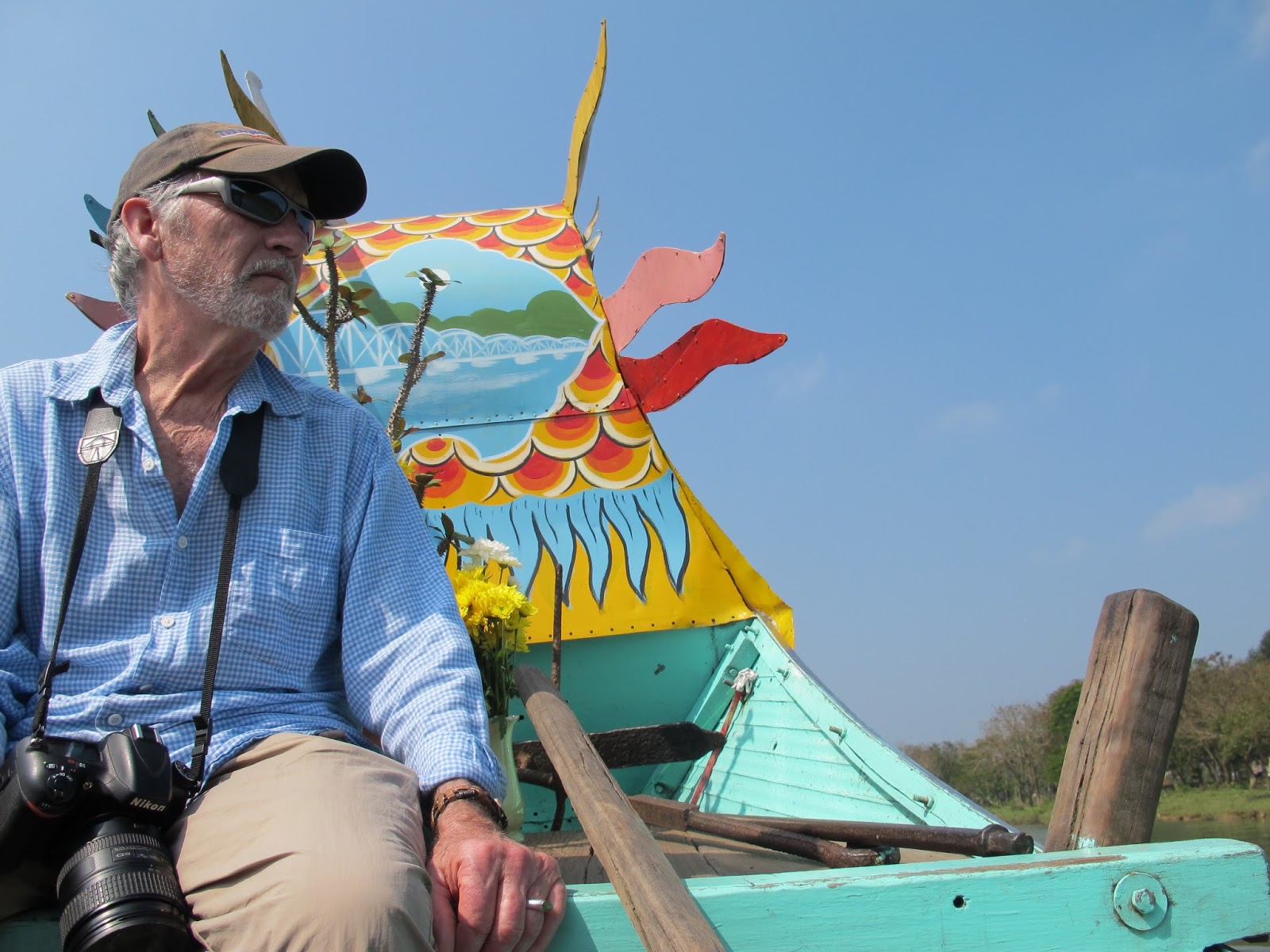
One day we went on a boat ride. We were originally going to go to 8 different shrines, but we decided just to go to two, and spend more time on them. The first was an active monastery. It had a tall building out front with several large bells. It had several small living buildings and a worship hall and a meditation hall. The second was the tomb of emperor Minh Mang, also known as emperor Phuc Kiew. Phuc Kiew, pronounced 'f**k you' (or at least we think it is), created several reforms to the government which limited and changed the salaries of the mandarins, and initiated the construction of roads among other things. We ate lunch on the boat, and went home.

The day following the boat ride we went to the nearest beach to Hue, Thuan An beach. We ate lunch (clams and fish), and went for a walk. We were planning on swimming, but we saw a huge group of people, divided in two, a search party, and a praying area. Someone had drowned. We walked up the beach and saw the remains of a flood, several concrete buildings were half buried in sand and were being eaten by the earth. Most of them were fish storage tanks, and not houses.

Backstreet Academy is a program who's plan is to connect normal people with crafts people and have them give a lesson in their crafts. We did two, Cooking, and Conical Hat making (not comical hats, conical hats). Conical hats are the cone-like sunhats seen in so many Asian cultures. The process for making them is as follows:

1: Get, cut, and iron bamboo leaves.
2: Connect the bamboo to the cone frame with wire. Even out.
3: Add hat frame and sew.
4: Add second layer and sew.
5: Add hat rim and sew.
6: Waterproof and lacquer.

We did not do all this. It would have taken days. Our teacher made several hats and stopped at different times to show us the stages. We then tried out a little of each stage.

The other thing we did a workshop on was home cooking. Home cooking in Vietnam uses an amazing amount of MSG. Our teacher was shoveling MSG into everything. It did taste good though. We rolled beef rolls for frying, cut eggplant for frying and balled fish balls for soup. We also used a fancy looking rice steamer that looked like a space ship. We didn't do much except the final steps in the process of cooking. She had already cooked almost everything. But it was fun.

Talking of crafts, we also visited a basket workshop and a fan workshop. The basket workshop had a large number of people stationed under a large roof weaving, lacquering, and painting bamboo baskets. There were also people using plastic to make waterproof outside woven furniture. The fan workshop however only had two men and a lot of technology. A machine that sands, a machine that splits bamboo, and a machine that stiffens. They just did the manual connecting. We got a basket and free fans!

An hour out of Hue there is a national park called Bach Ma. It was one of the parks that was defoliated by agent orange. And it is also possible that agent orange killed the trees because none of the trees looked older than 50 years. Bach Ma mountain lies 1250 meters from sea level, and was a popular retreat for French rich people and royalty. It was also a hiding spot for the Vietcong during the 60's. At the summit there is a shrine called the summit tower, and a massive gong that we rang. A bit lower down however there are countless small pools and waterfalls with surprisingly cool water. We hiked for a while along a river, and stopped for lunch and swimming. There was a lot of rock climbing involved in the hike. Luckily there were cables to hold on to. At the end of the river it plummets several thousand feet into, something. I couldn't see because Camille would not let me get too close to the edge. But other people would get really close, to the point of sitting on the edge and dangling their feet over the edge. We then hiked back, and drove back to Hue.

Camille booked a session at Alba spa hot springs retreat. There were various activities. A canopy zipline, a small zipline, a ropes course, hot springs, and massage. I chose massage and hot springs just like Camille, Susan, and Jim. The massage was awesome. I felt like I had been born again. The hot springs were great, but just a little too hot. After we were done we went on a walk. On the walk I looked at the ropes courses and decided I wanted to do it. So we had lunch and I went to do the ropes course and the small zipline. The ropes course was exhilarating. At first I was scared. But after I got used to the height I started having fun. So much that even half way through I started dancing to the music played on the high speakers. I had a lot of fun at Alba, and also everywhere else. So I am exited for when I write about the next part of the travels.


miércoles, 15 de marzo de 2017

Ninh Binh

 Ninh Binh is a small town a few hours south of Ha Noi. Ninh Binh is a rice farming town among massive cartoonesque limestone mountains. The town itself isn't too big. There aren't many attractions in Ninh Binh, but in-between the mountains there are countless small caves and rivers. Even though the mountains look really good for rock climbing, there doesn't appear to be much climbing in Ninh Binh. We stayed in an 'ecolodge' near a cave attraction called the Mua caves. But more than that, the attraction of that area was a shrine atop a mountain and some serious stairs leading up to it.

The shrine wasn't very grand. It consisted of a roof and a small statue. At the summit (a few feet up) was a long statue of a dragon, hence the name of the pagoda: lying dragon top. We hiked up the stairs twice, once to see the top, and the second time to follow some mountain goats out of curiosity.

We rented bicycles to ride through the rice paddies (no, not directly, there were paths). We encountered a group of small children along the path who blocked our way. It was a hilarious encounter because one boy reached his hand into the churro bag I had in the front basket of my bicycle and when he realized it was empty he ate the crumbs and threw the bag on the ground. His friends laughed at his boldness. We also saw a duck farm with so many baby ducks that when they moved they looked like a flowing river. They were also scared of the goats that lived on the mountain and when the goats came down from the mountain the yellow ducklings would waddle down to the river as fast as they could. We also came across two boys in the rice paddies who appeared to be catching fish, while trampling a lot of rice in the process. We also saw that the fish appeared to be coming out of an open pipe between the field and a water reserve pond. We did not know weather the fish had been let out purposefully or if it had been an accident. The mystery remains. We rode quite a lot, and when we decided to turn back my bike chain got unhooked. Now, my bike had a chain protector, so it was really hard to get it back on. We eventually resorted to hitting it with rocks.
On our way back we passed by a pulperia, we stopped to get more chips, and this strange man walked up near Jim, Susan noticed him, but Jim appeared not to. He was wearing strange traditional clothes, and cloth foot wear. He had a long white beard. Susan and I have come to the conclusion that he was the ghost of Ho Chi Minh, who was an Important revolutionary, and he rose to power after the last emperor of Viet Nam.

On out last day we decided to go on a boat tour of the river caves. We drove a seemingly long way, only to realize it was actually a really short way, and the taxi driver, who was using a meter, was trying to earn a bit more cash. We arrived at Trang An. After figuring out how the tickets worked, we got on a boat with a German woman called Dana. We were conducted though stunningly low ceiling caverns. We drove through an amazing display of mountains and caves. We stopped at a temple which was an important military center during the 12th century, during the attack by the Mongols. It was smart because the horses the Mongols had could not trespass the rivers or mountains.


When we left the were driven into town and went to the train station. At 9 we walked onto the overnight train. We accommodated our selves into or sleeper car. And went to sleep as the train was leaving the station.

martes, 28 de febrero de 2017

          I knew I was going to love Vietnam's food, I knew about pho (noodle soup), I knew about bun (cold rice noodles with meat), and I was really exited. The food lived up to my expectations. Restaurant and street food were hard to distinguish by taste alone. Street food however, was served on short little tables, and you sat on munchkin sized plastic benches outdoors. Restaurant food is indoors, on American sized tables and benches.
          Street life in Ha Noi is really interesting. People pray to small shrines on the sidewalk as well as temples highly present in urban areas. Street vendors stroll with bikes or carry baskets of fruit, meat, fish, vegetables, all sorts of stuff. Tourists walk casually down the street. There are a lot of tourists.
          Vietnamese TV is a lot like Honduran TV, but in vietnamese. Weird game shows, tacky music videos, news. Jim and I had a lot of fun trying to find out what people were saying based of their actions and tone of voice. Jetlag was bad. I used to wake up at midnight wanting lunch, and falling asleep at mid day. A trip from Boston to Vietnam causes the worst possible jetlag, 12 hours of it. It was like being turned upside down and shaken.

          Eventually we went to a temple called Ngoc Son. The temple sat on an island in the middle of a lake. The story goes that during the war with the Chinese, a Viet warrior was given a magic sword by a golden turtle. After the war was over however, the turtle demanded the sword and went back to live on the bottom of the lake. This turtle was real, of course it was not golden. It was an endangered soft shelled giant turtle, it still resides on the bottom of the lake.
          One day Susan brought us to a museum. It was called the Vietnamese Museum of Ethnology. We saw a lot of different ethnic traditions. Shaman rituals, weaving, baskets, swords, dove and fish traps, and all sorts of cool stuff. We also looked inside recreated Vietnamese houses. We also saw funny wooden fertility statues around a recreated burial home. Vietnamese homes are tall and skinny. They take up very little surface space but instead stretch up several stories. It is different than what I am used to, Tegucigalpa has small but squat one floor buildings, so, it is pretty interesting visually.
         Ha Noi, Vietnam's capital, is really interesting, everything from the food, to the culture, 
to the smog. Hanoi gave me a really good first impression.